Can a New Hot Tub Cover Help Lower Energy Costs?
A hot tub can lose a surprising amount of heat when the cover is worn, damaged, waterlogged, or no longer fitting correctly. When that happens, the heater may need to run more often to maintain the water temperature.
A replacement hot tub cover can help reduce heat loss, but the real benefit depends on the fit, foam condition, construction, and how the spa is used.
For Southern California spa owners, the right cover should also match the local climate. Coastal areas often have cool nights and marine air, while inland areas can experience much hotter daytime temperatures and larger temperature swings.
How Heat Escapes From a Hot Tub
Hot water naturally loses heat to the surrounding air. When the spa is uncovered, that heat loss can happen quickly.
A properly fitted insulated cover creates a barrier between the warm spa water and the outside air. This helps slow heat loss and reduces how often the heater needs to run to maintain the set temperature.
Heat loss can increase when:
- The cover no longer fits the spa correctly
- Gaps have developed around the edges
- The foam core has become damaged
- The vapor barrier has failed and moisture has entered the foam
- The cover is sagging or no longer sitting properly on the spa
Why a Proper Fit Matters
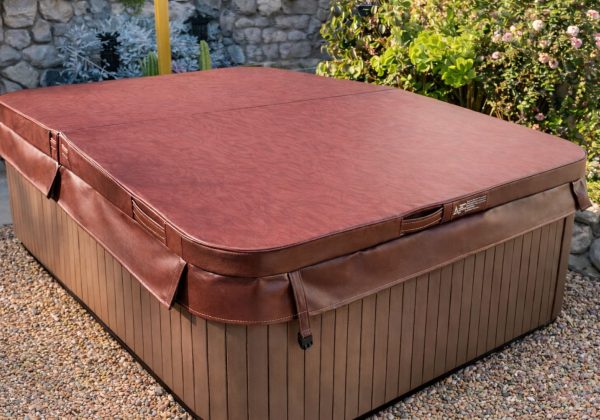
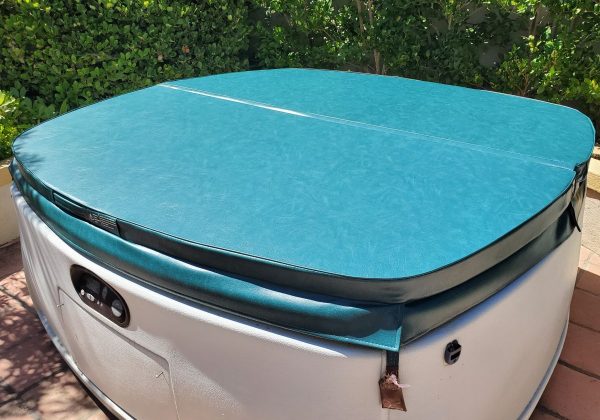
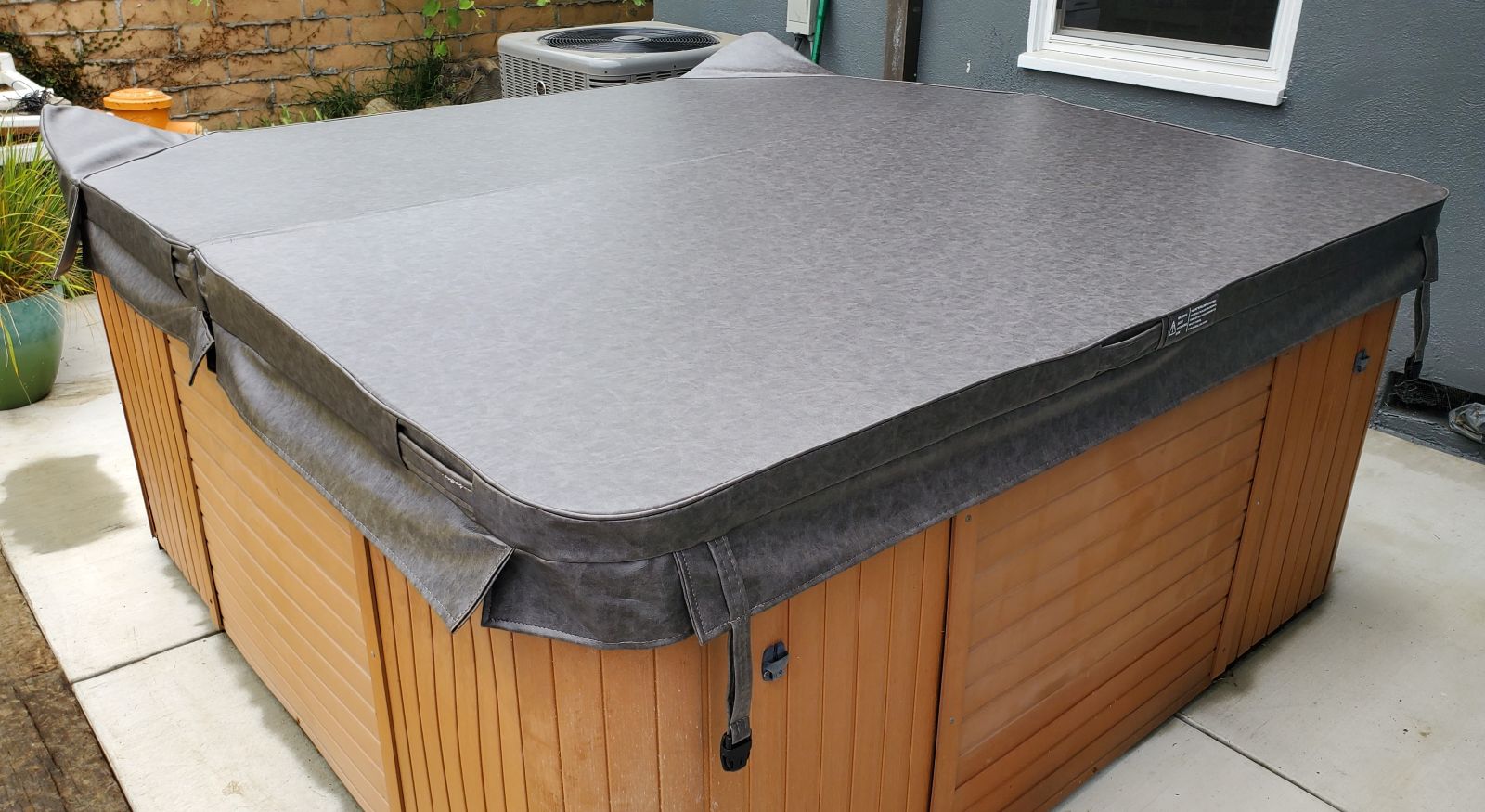
A replacement hot tub cover should be made to the correct size and shape of the spa.
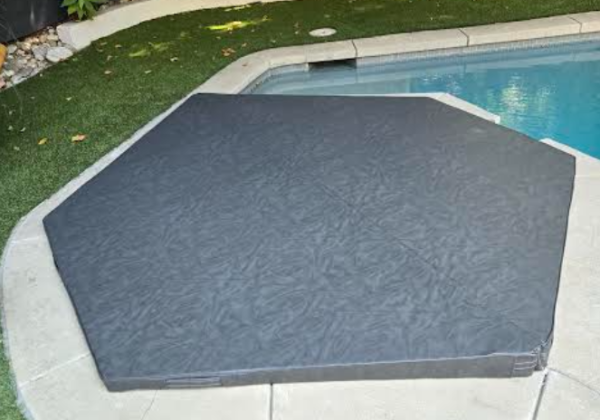
For portable and above-ground spas, this normally means measuring the outside dimensions of the spa shell and identifying details such as the corner radius, cut corners, skirt length, fold direction, and any special features that may affect the fit.
A cover that is too small may leave gaps. A cover that is too large may not sit correctly on the spa. Either problem can reduce performance.
Learn more about available foam options, colors, and construction on our Portable Spa Covers page.
What Happens When a Cover Becomes Waterlogged?
A hot tub cover becomes heavy when moisture gets through the vapor barrier and enters the foam core.
Waterlogged foam is harder to lift and can reduce the usefulness of the cover. Once the foam has absorbed a substantial amount of moisture, replacing the cover is usually more practical than trying to repair it.
Some common signs of a waterlogged cover include:
- The cover is much heavier than it used to be
- The foam panels are sagging
- Water collects in low areas
- The cover is difficult to open or move
- The cover no longer sits evenly on the spa
Does Foam Density Affect Energy Efficiency?
Foam density affects strength, durability, and insulation performance, but the heaviest foam option is not automatically necessary for every spa owner.
For many portable spas in Southern California, Deluxe 1.5 lb foam provides a good balance of strength, insulation, and manageable weight. Heavy Duty 2.0 lb foam is available when additional strength is desired.
The right choice depends on the spa, climate, how often the spa is heated, and how the cover will be used.
The goal should be to choose the proper construction for the situation rather than automatically buying the most expensive option.
Can a New Cover Lower Energy Costs?
A properly fitted replacement cover can reduce unnecessary heat loss when the old cover is damaged, poorly fitted, sagging, or waterlogged.
That can reduce how often the heater needs to run to maintain the water temperature. The actual savings will vary depending on the spa, heater, water temperature, local climate, electricity rates, and condition of the old cover.
No honest company should promise a specific amount of energy savings without knowing those details.
Southern California Climate Matters
Southern California has several different climate conditions.
Coastal areas may have mild daytime temperatures, cool nights, marine air, and humidity. Inland areas can experience much stronger heat and greater temperature changes between day and night.
Strong sunlight is also an important concern throughout the region. UV exposure and heat can shorten the life of exterior materials when a cover is neglected.
Choosing the correct foam and maintaining the cover properly are both important parts of long-term performance.
When Should You Replace a Hot Tub Cover?
A typical spa cover often lasts approximately 4 to 6 years. With proper maintenance and favorable conditions, some covers may last another year or two.
Replacement should be considered when:
- The cover has become excessively heavy
- The foam is sagging or holding water
- The exterior is badly cracked or deteriorated
- The cover no longer fits properly
- The hinge or seams are separating
- The cover is no longer practical to open or use
Actual lifespan depends on sunlight, water chemistry, chemical vapor exposure, maintenance, climate, and how the cover is handled.
Protecting the Spa Is About More Than Energy
A good spa cover also helps keep leaves, dirt, insects, and other debris out of the water.
This can reduce cleaning time and help the filtration system work more effectively. A properly fitted cover also protects the spa when it is not being used and helps reduce direct exposure to sunlight.
Energy efficiency is important, but fit, protection, durability, and ease of use all matter when choosing a replacement cover.
Frequently Asked Questions
Can a replacement hot tub cover reduce heat loss?
Yes. A properly fitted insulated cover helps reduce heat loss from the spa water and may reduce how often the heater needs to run.
Why is my hot tub cover getting heavy?
A heavy cover often means moisture has entered the foam core through a damaged or failed vapor barrier.
Should I always buy the heaviest foam available?
No. The right foam density depends on the spa, climate, intended use, and desired strength. Many Southern California spa owners do well with Deluxe 1.5 lb foam, while heavier options are available when needed.
How long should a hot tub cover last?
A typical spa cover often lasts about 4 to 6 years. Proper maintenance and favorable conditions may extend that lifespan another year or two.
How long does a replacement cover take to make?
Normal production time is approximately 3 to 4 weeks.
Need a Replacement Hot Tub Cover?
A replacement hot tub cover should fit correctly, use the right foam density, and match the way the spa is actually used.
Spa Covers Etc. has been helping customers with replacement and custom spa covers since 1997. We offer multiple foam options, approximately 14 colors, and covers for portable spas, built-in spas, oversized spas, and swim spas.
For help choosing the right replacement cover, call Chris at (949) 496-2883.
We’ve got your spa covered!