How Insulation Impacts Round Spa Cover Performance
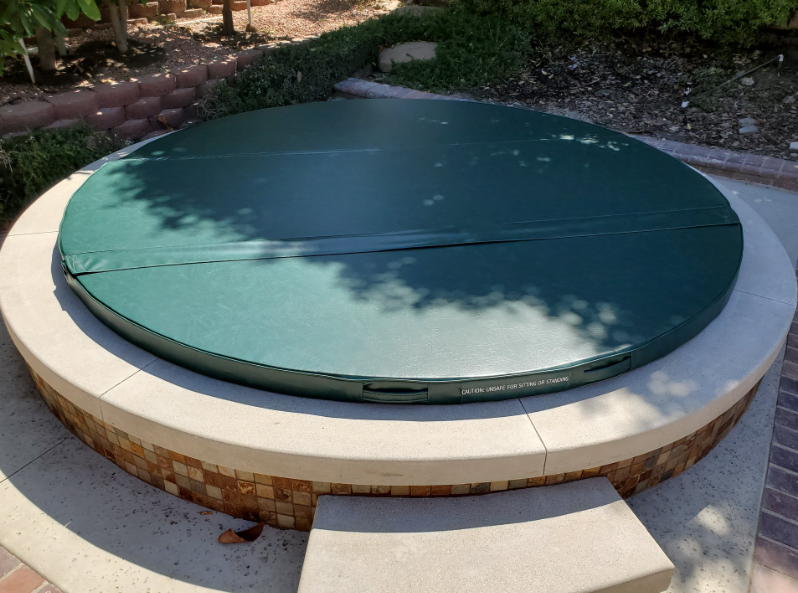
If you own a round spa, the performance of your cover depends on insulation quality and proper fit — not just shape.
A well-constructed round spa cover helps retain heat, reduce evaporation, and protect your spa from weather damage. But performance comes from materials and construction, not whether the spa is round or square.
Why Insulation Is the Real Factor
Heat rises, and most heat loss occurs at the surface of the water. A properly insulated spa cover slows that heat transfer.
Important features include:
-
4” to 2” tapered foam cores
-
2 lb density insulation
-
Vapor barriers to prevent water absorption
-
Tight perimeter fit
These factors matter more than the spa’s shape.
Does Shape Affect Performance?
Round and square spa covers can perform equally well when properly built.
The difference comes down to:
-
Accurate measurements
-
Proper taper
-
Foam density
-
Construction quality
A poorly constructed cover — round or square — will lose heat.
A well-built cover — round or square — will perform efficiently.
Construction Quality Prevents Common Problems
Over time, lower-quality covers can:
-
Become waterlogged
-
Sag in the center
-
Lose insulating value
-
Develop cracks in vinyl
Proper foam density and vapor barriers help prevent these issues.
When to Replace a Round Spa Cover
Replacement may be necessary if:
-
The cover feels heavy
-
The center sags
-
Heat loss increases
-
Vinyl shows cracking
Performance declines gradually, so many owners don’t notice the energy loss right away.
Final Thoughts
Round spa covers are not inherently better or worse than square covers. What matters is insulation thickness, foam density, vapor protection, and fit.
A properly constructed insulated cover improves efficiency, reduces evaporation, and extends the life of your spa — regardless of shape.